
Sweepstakes Casino KYC Verification — Documents and Timeline
 Available in US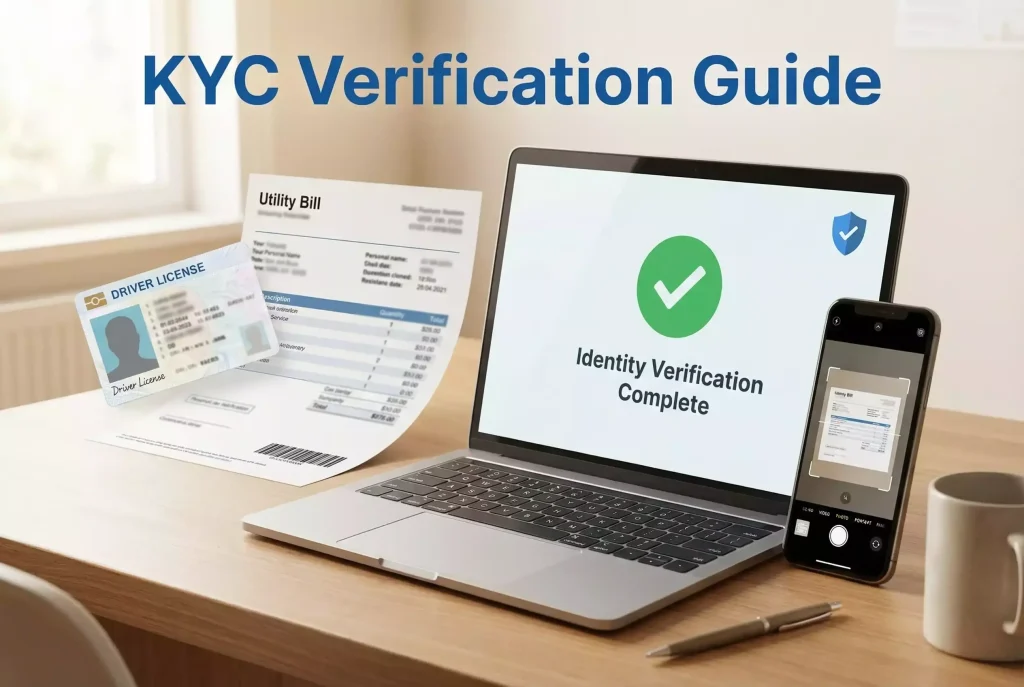
KYC verification stands between you and your first sweepstakes casino redemption. Every legitimate platform requires identity verification before processing withdrawals, transforming what seems like a simple cash-out request into a document submission process that can take anywhere from hours to weeks depending on your preparation.
Understanding sweepstakes casino KYC verification before you need it prevents frustrating delays when you’re ready to redeem. Players who gather documents in advance and understand submission requirements typically clear verification within 24-48 hours. Those who scramble to find acceptable proof of address or submit blurry photos often face rejection cycles that extend timelines dramatically.
This guide covers everything you need to know about verifying your identity at sweepstakes casinos: which documents platforms accept, how to submit them correctly, typical processing times by casino, common rejection reasons, and troubleshooting strategies when verification stalls. Completing KYC once positions you for faster subsequent redemptions, making the initial effort worthwhile.
Required Documents for Verification
Sweepstakes casinos require three categories of documentation: government-issued identification, proof of address, and sometimes payment method verification. Having acceptable documents ready before initiating verification streamlines the process significantly.
Government-issued ID must display your photo, full legal name, and date of birth. Acceptable forms include driver’s licenses, state ID cards, and US passports. The document must be currently valid — expired IDs face automatic rejection regardless of how recently they expired. Some platforms accept passport cards, though driver’s licenses remain the most commonly submitted and quickly processed option.
Proof of address establishes that you reside where you claim. Acceptable documents typically include utility bills, bank statements, or government correspondence dated within the past 90 days. The document must show your full name and complete address matching your account information. Cell phone bills sometimes qualify, though some platforms specifically exclude them. Lease agreements work at certain casinos but not universally.
Payment method verification applies when you’ve made purchases using credit cards, debit cards, or bank accounts. You may need to submit photos of cards showing your name and partial card numbers, or bank statements confirming account ownership. This requirement protects against fraud by ensuring the payment method actually belongs to you.
Social Security Number verification occurs at some platforms, particularly for players redeeming larger amounts. The IRS requires sweepstakes operators to collect SSN information for prize reporting purposes when annual redemptions exceed $600. Platforms may request W-9 forms or SSN documentation during verification or separately before processing significant redemptions.
These verification requirements exist partly to protect players themselves. According to the National Council on Problem Gambling’s NGAGE 3.0 survey, approximately 8% of American adults — around 20 million people — have experienced symptoms of problematic gambling. Identity verification helps prevent underage play and provides a friction point that responsible gaming advocates consider beneficial.
How to Submit Documents Correctly
Proper document submission prevents rejection cycles that delay verification. Most verification failures stem from avoidable issues with photo quality, document visibility, or file format problems.
Photo quality requirements demand clear, well-lit images where all text remains legible. Avoid shadows across document surfaces, glare from flash reflecting off laminated IDs, and blurry images caused by camera shake. Natural daylight typically produces better results than artificial lighting. Some players find placing documents on contrasting backgrounds helps cameras focus correctly.
Full document visibility means entire documents must appear in frame with all four corners visible. Cropping that cuts off edges triggers rejection even if all text remains visible. Leave margin space around documents rather than filling the entire frame edge-to-edge.
File format and size specifications vary by platform. Most accept JPG, PNG, and PDF formats. File size limits typically range from 5-10MB, sufficient for phone photos but potentially problematic for high-resolution scans. Compressing oversized files before upload prevents submission errors.
As the Social and Promotional Games Association emphasizes in their published Code of Conduct, member operators maintain “age verification, location verification, KYC systems and processes” as standard practice. This industry-wide commitment means verification requirements remain consistent across legitimate platforms regardless of which casino you use.
Upload interfaces differ by casino. Some provide dedicated document upload sections in account settings, others require emailing documents to verification teams, and some use third-party verification services with their own submission portals. Following platform-specific instructions exactly — rather than assuming all casinos work identically — prevents submission to wrong locations.
Confirmation of receipt provides peace of mind that documents arrived successfully. Most platforms send email confirmation upon document submission and subsequent updates as verification progresses. If confirmation doesn’t arrive within a few hours, checking spam folders or contacting support confirms whether resubmission is necessary.
Processing Times by Casino
Verification timelines vary significantly across platforms based on their review processes, staffing levels, and automation capabilities. Understanding typical timeframes helps set expectations and identify when delays warrant support contact.
Stake.us generally processes verification within 24-48 hours for straightforward submissions. The platform has invested in verification infrastructure as it scaled, maintaining reasonable timelines despite growing player volumes. Complex cases or those requiring additional documentation may extend beyond this window.
Chumba Casino’s verification timeline reflects its established processes built over more than a decade of operation. Initial verification typically takes 24-72 hours, though the platform’s larger player base sometimes creates backlogs during peak periods. First-time verifications receive priority over reverification requests.
Pulsz positions itself partly on processing speed, with verification often completing within 24 hours for properly submitted documents. The platform’s newer infrastructure handles document review efficiently, though this advantage diminishes if submission issues require resubmission cycles.
WOW Vegas and McLuck fall within the 24-72 hour range for standard verification. Both platforms maintain reasonable processing times relative to their player volumes. Holiday periods and promotional events that drive signup surges can temporarily extend timelines.
Expedited verification doesn’t exist as an official option at most platforms. While some players report success requesting priority processing for time-sensitive situations, this remains at support discretion rather than guaranteed service. Planning verification before you urgently need redemption remains the most reliable approach.
Reverification requests occur when platforms detect account changes or as part of periodic compliance reviews. These secondary verifications typically process faster than initial submissions since your account already has verification history.
Common Rejection Reasons and Solutions
Understanding why verifications fail helps you avoid common mistakes and resolve rejections quickly when they occur. Most rejections stem from a handful of recurring issues with straightforward solutions.
Blurry or low-quality images represent the most frequent rejection cause. Phone cameras with dirty lenses, inadequate lighting, or user movement during capture produce images where verification teams cannot confirm document authenticity. The solution involves cleaning your camera lens, finding better lighting, and stabilizing your phone against a solid surface during capture.
Name mismatches between documents and account information trigger automatic rejection. If your ID shows “William” but you registered as “Bill,” platforms cannot verify identity. Similarly, address discrepancies between proof of address and account information require resolution. Updating account details to match documents exactly — or providing additional documentation explaining legal name changes — resolves these issues.
Expired documents fail regardless of recent expiration dates. Verification teams cannot accept identification that isn’t currently valid. Renewing expired IDs before attempting verification remains the only solution, which can delay redemption access significantly in states with lengthy DMV processing times.
Document type rejection occurs when submitted documents don’t meet platform requirements. Not all utility bills qualify — some platforms exclude cell phone bills specifically. Bank statements must come from recognized financial institutions. Reading platform-specific acceptable document lists prevents wasting time submitting materials that will automatically fail.
Glare and shadows obscuring critical information lead to rejection even when documents are otherwise acceptable. Laminated driver’s licenses are particularly prone to flash glare. Repositioning light sources or disabling camera flash typically solves this problem.
Partial document visibility — corners cut off, text running beyond frame edges — requires complete recapture. Verification processes cannot approve documents where any portion remains invisible, as hidden sections could contain disqualifying information.
Troubleshooting Verification Issues
When verification stalls or rejections seem incorrect, systematic troubleshooting resolves most situations without extended delays. Knowing escalation paths and common resolutions accelerates problem-solving.
Support contact should provide specific rejection reasons. Generic “verification failed” messages without explanation indicate incomplete communication from the verification team. Requesting detailed rejection reasons identifies exactly what needs correction rather than guessing at problems.
Document alternatives help when your standard proof of address faces repeated rejection. If utility bills keep failing, try bank statements. If bank statements don’t work, government correspondence like tax documents or voter registration might succeed. Platforms typically accept multiple document types within each verification category.
Escalation to supervisors becomes appropriate when frontline support cannot resolve issues or provides inconsistent guidance. Most platforms have verification specialists who handle complex cases. Politely requesting escalation — particularly when you’ve followed all stated requirements — often reaches staff with authority to resolve edge cases.
Third-party verification services used by some platforms have their own support channels. If your casino uses services like Jumio or Onfido for document verification, those companies sometimes provide additional troubleshooting resources beyond what the casino’s own support offers.
Account information updates may prove necessary if discrepancies between your documents and registration details cannot otherwise reconcile. Platforms generally allow account detail changes with proper documentation, though this process adds steps to verification completion.
Patience becomes necessary for complex situations. While straightforward verifications complete quickly, edge cases involving unusual documents, recent address changes, or name discrepancies can require multiple review rounds. Maintaining polite persistence with support — checking status every few days without daily harassment — produces better outcomes than aggressive escalation.
The wider context sits in our complete guide to SC coin casinos.
It is the gate before redeeming Sweeps Coins.